

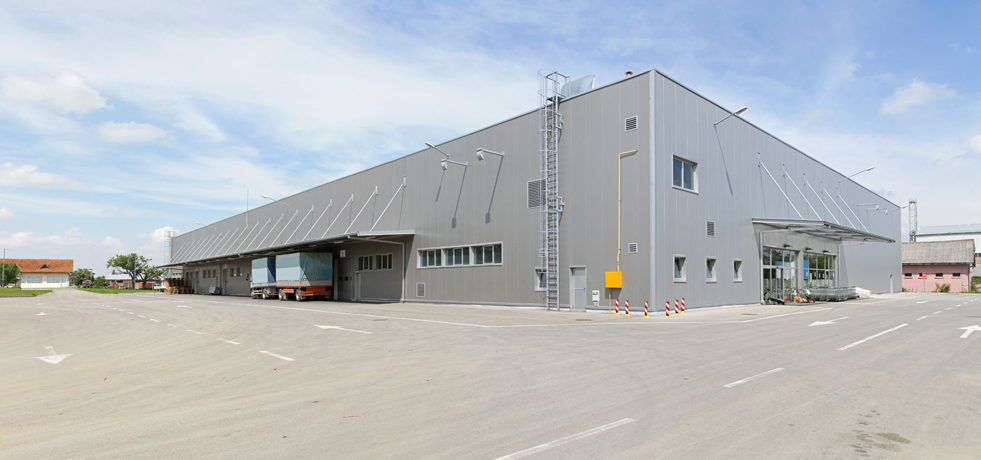
Warehouse safety in Australia sits under some of the strictest workplace regulations in the country. Most operators have invested heavily in the obvious controls: forklift training, racking inspections, PPE programs, emergency procedures, and lone worker policies. What gets missed in most WHS audits is the layer underneath all of it. If your workers can't get a reliable mobile signal inside the warehouse, every other safety system you've built becomes harder to execute when something goes wrong.
This article covers warehouse safety best practices in line with Australian WHS obligations, then looks at the connectivity issue that quietly undermines them.
The regulatory landscape: warehouse safety in Australia
Warehouse operations sit within the model Work Health and Safety Act 2011, adopted by most Australian states and territories. Victoria operates under its own Occupational Health and Safety Act 2004, but the core obligations are broadly similar.
Under the WHS framework, a Person Conducting a Business or Undertaking (PCBU) has a primary duty of care to ensure the health and safety of workers, so far as is reasonably practicable. For warehouse operators, this duty extends across the full operational footprint, covering the floor, the racking, the loading docks, cold storage zones, and any yard or external work area.
Safe Work Australia consistently identifies the transport, postal and warehousing sector as one of the higher-risk industries for serious work-related injuries. Forklift incidents, falls from height, manual handling injuries, and racking failures remain the most common causes of harm. Each is well understood, and each is the focus of significant compliance attention.
Warehouse safety best practices
A strong WHS program in a warehouse environment typically covers the following areas.
- Risk assessment and hazard identification: Document hazards across all operational zones, including loading docks, racking areas, cold storage, mezzanines, and external yards. Review assessments after any incident, layout change, or new equipment introduction.
- Forklift and mobile plant safety: Verify High-Risk Work Licences, run pre-start checks, establish designated pedestrian zones, enforce speed limits, and maintain clear separation between mobile plant and foot traffic.
- Racking integrity: Quarterly visual inspections, annual professional inspections, immediate isolation of damaged racking, and clear load capacity signage on every bay.
- Manual handling controls: Lifting aids, conveyors, and pick-to-light systems where practical. Training in safe lifting techniques and rotation policies to reduce repetitive strain.
- PPE programs: High-vis clothing, safety footwear, hearing protection in noisy zones, and cold-weather PPE in chilled or frozen environments.
- Emergency procedures and evacuation planning: Documented evacuation routes, regular drills, designated wardens, and clearly marked muster points. Procedures should account for evacuation from cold storage and from elevated work areas.
- Incident reporting and review: A reporting system that captures near-misses as well as incidents, with regular review cycles to identify patterns and inform controls.
- Lone worker policies: A documented procedure for workers operating in isolation, including check-in protocols, monitoring technology, and emergency escalation paths.
That last point is where the connectivity issue begins to surface. Lone worker monitoring depends entirely on the worker being reachable.
The hidden safety risk: unreliable mobile coverage
Warehouses are some of the most signal-hostile environments in commercial Australia. Several factors compound to create coverage problems:
- Steel-clad walls and steel-framed construction reflect and block mobile signals
- High-bay racking, particularly when stocked with metallic goods, creates dead zones at floor level
- Refrigeration and cold storage units act as Faraday cages, blocking the signal almost entirely
- Industrial estate locations often sit on the edge of macro network coverage
- Large floorplates exceed the range of any outdoor signal that penetrates the building
- Basement loading docks and underground areas typically have no usable signal
The result is predictable. Workers report patchy coverage, dropped calls in specific zones, and stretches of the warehouse where nothing works at all. Most operators treat this as a productivity issue and accept it as a cost of working in a large industrial building.
The problem is that the same coverage gaps that frustrate stocktakes also break safety systems.
When a forklift operator is trapped under a fallen load in an aisle with no signal, they cannot call 000. When a lone worker in cold storage triggers a duress alarm, the alarm does not transmit. When wardens need to coordinate an evacuation across a 20,000 square metre site, push-to-talk drops out. When a connected wearable detects a fall and tries to alert a supervisor, the alert fails. When an injured worker tries to call for help, they have to physically travel through the building to find a signal, losing time that may matter.
None of these failures show up in a standard WHS audit, but each one represents a control that has been quietly compromised.
Mobile coverage and WHS compliance
The intersection of coverage and compliance is increasingly scrutinised after incidents. When SafeWork inspectors investigate a serious workplace event, they look at the controls in place at the time. A safety app that did not transmit because coverage was unavailable is functionally equivalent to no app at all. A lone worker check-in system that cannot reach the worker provides no protection.
The PCBU's duty of care under the WHS Act requires controls to be effective in practice, so far as is reasonably practicable. Documented safety systems that depend on mobile connectivity need that connectivity to exist throughout the workplace.
This is becoming particularly relevant for operators using lone worker monitoring platforms, mobile-based duress alarms, IoT safety sensors, and connected PPE. Each of these technologies assumes a working mobile signal. Without one, the technology is decorative.
How in-building coverage solutions solve the problem
In-building coverage (IBC) is the industry term for engineered systems that deliver a reliable mobile signal throughout a building. For warehouses, the two most common solutions are:
- Cel-Fi smart signal repeater: Carrier-approved, ACMA-compliant repeaters that boost macro network signal inside the building. Suitable for small to medium warehouses, or for targeting specific dead zones within a larger facility.
- Distributed Antenna Systems (DAS): A network of antennas distributed throughout the building, fed by a signal source. Suitable for large warehouses, multi-level facilities, and sites where uniform coverage is required across a substantial floorplate.
ACMA compliance is critical here. Australia has strict rules under the Radiocommunications Act about the use of mobile signal boosters, and unapproved devices carry significant penalties for both the user and the supplier. Many warehouses unknowingly run non-compliant equipment purchased online, which exposes the business to enforcement risk on top of the underlying coverage problem.
A properly designed IBC solution begins with an on-site RF assessment. A certified engineer measures signal conditions across the warehouse, identifies dead zones, assesses how building materials and racking layout affect coverage, and designs a system around what they find. After installation, performance is verified across the site before handover.
What good warehouse mobile coverage looks like
In practice, a well-designed IBC system delivers:
- Uniform signal across the warehouse floor, including in high-rack aisles
- Reliable coverage in cold storage and chilled zones
- Connectivity at loading docks, mezzanines, and external yards
- Multi-carrier support, where the workforce uses different networks
- Integration with existing safety platforms, lone worker apps, and IoT systems
- A documented coverage map that can be referenced in WHS audits
That last point matters. Coverage that has been engineered, tested, and documented can be evidenced to regulators. Coverage that exists by accident cannot.
Frequently asked questions
Is mobile coverage really a WHS issue?
Yes. Any safety control that depends on mobile connectivity becomes ineffective in coverage dead zones. The WHS Act requires controls to be effective in practice, which includes the communications infrastructure they rely on.
Can we use Wi-Fi calling instead of a signal booster?
Wi-Fi calling can fill some gaps, but it depends on uninterrupted Wi-Fi coverage and isn't supported by every device or carrier. It also does not solve emergency calls from devices that have lost both signal and Wi-Fi connection. For most warehouses, mobile coverage remains the primary requirement, with Wi-Fi as a complementary layer.
Are signal boosters legal in Australia?
Only ACMA-approved repeaters supplied by a carrier-authorised reseller are legal. Devices purchased online without ACMA approval are illegal to use, and penalties under the Radiocommunications Act apply to both users and suppliers.
Will one booster cover the whole warehouse?
It depends on the size, layout, and construction of the building. A single CEL-FI unit may cover a small warehouse, while a larger facility typically requires multiple units or a DAS. An RF assessment determines what's needed.
How long does an IBC installation take?
Most warehouse installations are completed within a few days, depending on system complexity. Site assessment, design, and ACMA approvals add some lead time before installation begins.
What is the most common cause of injury in Australian warehouses?
Manual handling injuries remain the leading cause of workers' compensation claims in the warehousing sector, followed by being hit by moving objects, falls, and incidents involving forklifts and mobile plant. These are also the categories that regulators focus on during compliance audits.
How often should a warehouse review its WHS procedures?
A formal review is recommended at least annually, after any serious incident or near-miss, after layout or equipment changes, and whenever new hazards are introduced. Lone worker procedures and emergency communications protocols should be tested more frequently than the broader WHS program.
Identify the coverage gaps that may be compromising your WHS controls
A WHS program is only as strong as the communications infrastructure that supports it. If lone worker monitoring, duress alarms, or emergency communications depend on mobile coverage your warehouse can't reliably provide, the control is not doing what it's meant to do.
MobileCorp specialises in in-building coverage for industrial and warehouse environments across Australia. Every project begins with an on-site RF assessment performed by a certified engineer, who measures real signal conditions, identifies dead zones, and designs a tailored solution around what they find.
Lorin McDowell 30 Jun 2026
Popular Tags
- Mobile Devices (80)
- Mobility (80)
- 5G (67)
- Telstra (64)
- MobileCorp Managed Services (53)
- Mobile Network (38)
- Networks (32)
- Cradlepoint (31)
- Apple (28)
- MobileCorp (28)
- iPhone (24)
- Remote Working (22)
- Network (18)
- Mobile Security (15)
- Wireless WAN (15)
- Covid-19 (14)
- UEM (14)
- Cyber Security (12)
- MDM (11)
- Mobile Expense Management (10)
- TEMs (9)
- Mobile Device Lifecycle (8)
- Mobile Device Management (8)
- Cloud (7)
- Unified Comms (7)
- Unified Communications (7)
- Wandera (7)
- Android (6)
- Sustainability (6)
- Data Networks (5)
- Network Security (5)
- Samsung (5)
- Security (5)
- Digital Experience (4)
- IOT (4)
- Microsoft Intune (4)
- Blog (3)
- Data (3)
- IT Services (3)
- Microsoft (3)
- DAS (2)
- Microsoft 365 & Teams (2)
- Retail (2)
- nbn (2)
- webinar (2)
- 4G (1)
- Distributed Antenna System (1)
- EMM (1)
- Emerging Technologies (1)
- Government (1)
- Hosted Telephony (1)
- In-Building Coverage (1)
- Managed Desktops (1)
- Nextivity (1)
- SD-WAN (1)
- Starlink (1)
- Telstra Services (1)
- WWAN (1)
- video (1)